
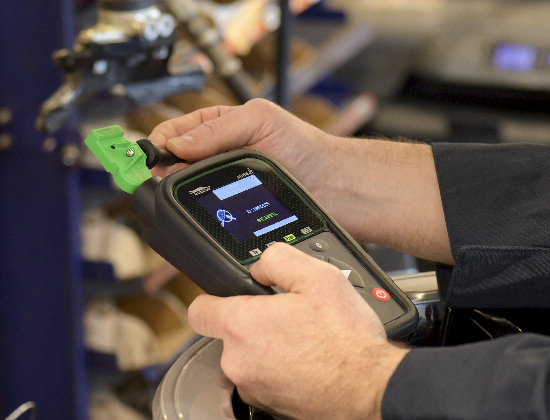
The automotive industry never stands still; neither should your tools. Since TPMS became mandatory for U.S. passenger cars and light trucks in 2008, the technology has continuously been evolving. What started as a basic safety system has grown into a complex, vehicle-specific solution—and your TPMS tools work best when they keep pace.
Early TPMS tools offered only limited capabilities, like sensor activation and key fob testing. Many couldn’t register new sensors on import vehicles, especially Japanese and Korean makes. As vehicle technology advanced, newer tools introduced built-in OBD functions, making TPMS relearns possible for vehicles that required a diagnostic connection.
Today’s TPMS tools offer even more. By programming universal aftermarket sensors, retrieving TPMS fault codes, and adjusting placard pressure settings, modern devices give you more control than ever.
To maintain your shop’s efficiency, make sure your TPMS tools are up to date – that ensures compatibility with the latest vehicles, expands your service capabilities, and keeps you one step ahead of the curve.
