
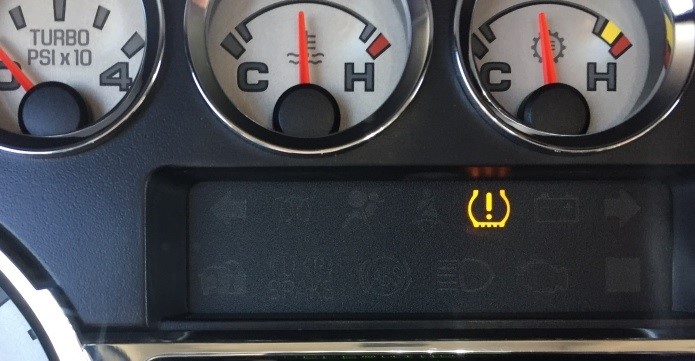
If the TPMS warning light is on, then technicians should test each sensor using a tool; any sensors that don’t respond after trying several times or show low battery or inaccurate pressure/temperature should be replaced. A solid warning light indicates low pressure; a blinking light means that there’s a system issue – lost communication with a sensor, etc.
If the tool’s test results are okay, then perform a relearn to make sure that the sensors inside vehicle’s wheels match the ID numbers stored in its module.
Warning light that stays on after those two steps warrants further investigation. Check for TPMS fault codes to see if there’s a DTC for an intermittent issue. If multiple codes are present for the sensor then it’s possible that it’s not compatible with vehicle, i.e. RF frame isn’t the right format. Sensors on older vehicles can read okay at the wheel but the signal might not reach the vehicle’s antenna which is further away (weak sensor battery). There could be a technical-service bulletin on the vehicle’s TPMS so have a dealership run the VIN and check for any active TSBs.
For Toyotas, check if the system is locked up (reset button was pushed too early) and if so use a TPMS tool to unlock the ECU, then perform a relearn.
Other possible defective components on TPM system are the antenna and module. If the keyfob isn’t working also then it’s possible that the car’s antenna is defective or came loose. If some of the vehicle’s other functions are inoperable (door locks, windows) then the issue could be with the body-control module as typically one computer handles other things too.
Physical checks are also useful; inspect the sensor’s components for damage and install a service kit – nut, seal, core & cap for clamp-in sensors or new rubber valve for snap-ins. Corroded valves can leak air out of the tire which will turn on a low-pressure warning. The valve core could be loose or stuck open. Check to make sure that the rubber valve was seated all the way during installation. Old tires tend to “dry rot” which can result in a loss of air pressure. Also an ambient temperature change of 10 degrees can change tire pressure by about 1 psi; a temp drop of 30 degrees or more overnight can be enough to cause the low-tire warning to come on.
